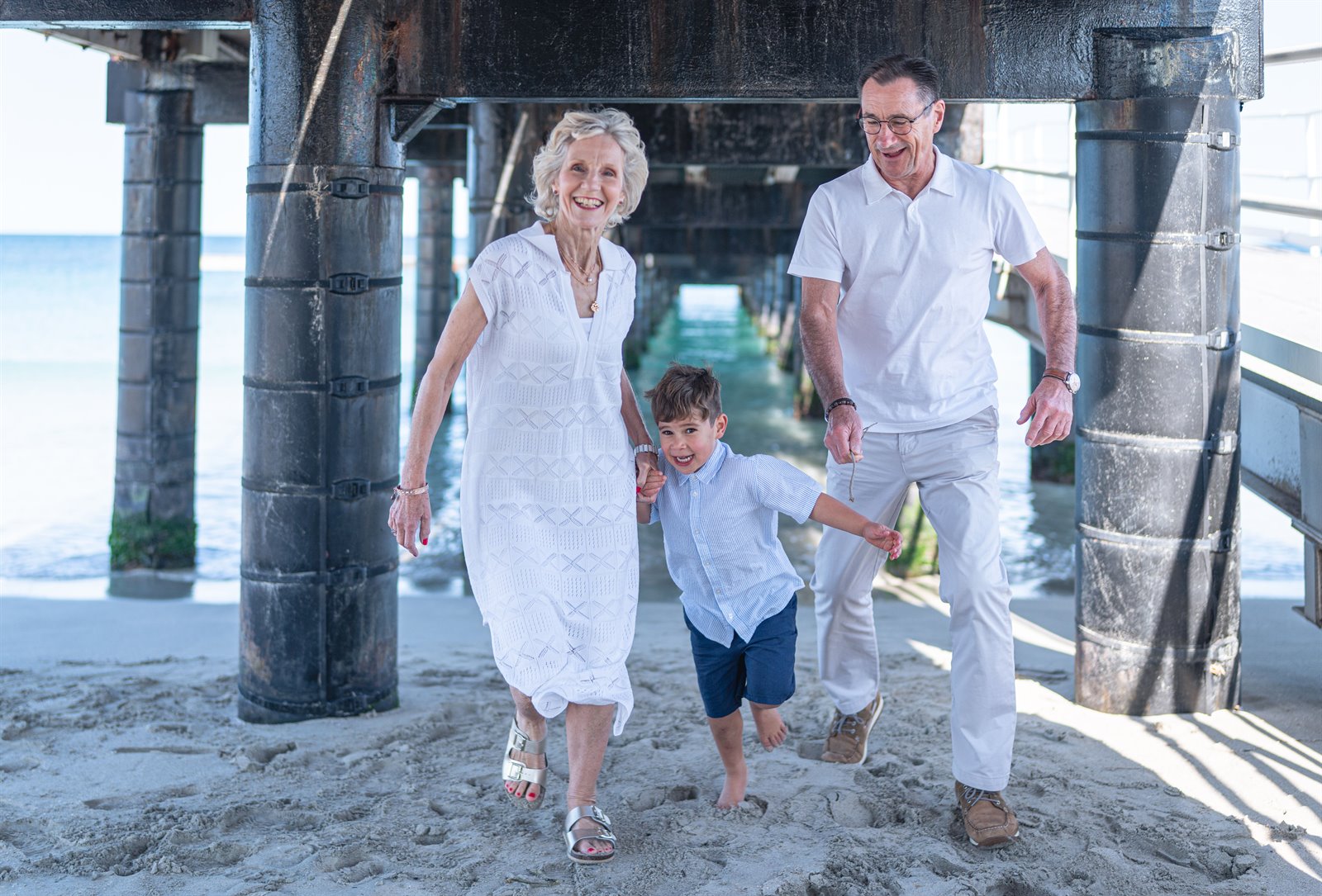
There is something special about childhood: the world inside a little person's head is much bigger and more colourful than it looks from an adult's perspective.
The idea that travel is good for children has long been popular with parents. But is there real science behind it? A growing body of research suggests the answer is "yes".
"Why do they speak like that here? Why do the streets look different? Why do people eat this? Where are we going now? And why?" - children are very impressionable. It is precisely this constant need to learn something new that is one of the reasons scientists are interested in family travel as a learning environment.
Of course, a parent can decide everything for the child. But they can also ask:
"What do you think we could do? Why do you think it is like this?"
The difference between the two seems small at first glance, but it is significant as an approach to upbringing.
Children don't only learn when they are taught
In 2024, researchers from Griffith University published in Tourism Management Perspectives a dedicated scientific review of how children learn during family trips. They examined the available research through the lens of social cognitive theory and reached an important conclusion: travel creates the conditions for informal learning, in which the child gains knowledge and skills through the interaction between their own behaviour, the people around them and the new environment.
When a child tries to read a map, order something in a restaurant, ask a stranger for directions or understand why the train is not leaving on time, they are solving real-life problems.
At school, a wrong answer is usually just wrong. In the real world, a wrong turn means you have to find another way.
This is a kind of learning that is hard to fully simulate in a classroom.
Novelty challenges the brain - and trains it
One of the most interesting areas is research into executive functions - attention, working memory, impulse control, planning and the ability to switch between different tasks. These functions are especially important in childhood, because they continue to develop over many years.
And what about character?
The most rigorous studies on the link between international experience and personality development have not been carried out on young children. They focus on young people who spend time abroad. In a longitudinal study published in the Journal of Personality and Social Psychology, Julia Zimmermann and Franz Neyer followed 527 students who went abroad and 607 students in a control group. The researchers found changes in several personality traits - among them greater openness to new experience and agreeableness, lower neuroticism and higher self-confidence. Particularly interesting is that much of the effect is linked to the new social relationships the participants built abroad.
Who the child travels with matters too
This is probably the most overlooked part of the story.
A large American study involving 9,539 children looked at the link between family holidays and life satisfaction. The results show a positive link between the two, but when the researchers examined the mechanisms behind it, it turned out that satisfaction with family relationships explains a large part of it.
Much of the benefit may come from something very ordinary: while travelling, parents are together with the child, they talk, look at something unfamiliar, solve problems and spend time outside their usual routine. The destination plays a role too, but it is the relationships that are the constant part of the experience.
Travel can create an environment in which the child more often uses and develops skills related to adaptation, attention, social interaction, independence and learning. Childhood is not only a time when a child accumulates knowledge. It is also a time when the little one gradually learns how to behave and adapt in a world that was not made to revolve around them. Talking to people, observing a new and unfamiliar environment, asking questions and trying new things while travelling all develop cognitive functions.
And the happy emotions and memories with mum and dad, grandma and grandpa, brothers, sisters, cousins and friends add one more lasting reason for children to travel. And it is well worth it.